
1400 – 1799: Surviving Inquisition and Imperialism
The fifteenth century was a big one for Christianity, and not necessarily in a good way. The Inquisition was in full swing, targeting Jewish communities, Muslims, and “heretics,” which included anyone who did not conform to Western gender norms. Meanwhile, Christopher Columbus landed in what he thought was India but turned out to be the Caribbean, and soon Europe was abuzz with talk of this “New World” and plans to conquer the peoples already living there.
Christianity was entangled with colonialism from the jump, with missionaries heading to the Americas. Some of them did what they could to speak up for the rights of indigenous peoples as well as the enslaved Africans brought to work in the colonies; but many more Christian leaders were all too happy to go along with the attempted genocide, the forced assimilation, the slavery, and other forms of violence.
Despite their best efforts, the European settlers could not stomp out the gender diversity that existed among the First Nations peoples and that was brought over from Africa. People in power could not prevent those the shoved down from blending the Christian God and the Saints with other genderfull religious figures. Meanwhile, gender diversity also endured in Europe.
A SEX-SHIFTING ABBOT…

The tale of the Abbot of Drimnagh, which hails from fifteenth century Ireland, offers us evidence both that stories of “gender metamorphosis” continued into this era and that syncretism between Catholicism and Irish lore lasted despite the Church’s condemnation of the latter.
The abbot of Drimnagh is on a walk after making preparations for Easter — which aligns nicely with the time of changing seasons and uptick in magical mischief in pre-Christian Irish tradition — when he foolishly decides to take a nap on a mound that turns out to belong to the fairies.
Upon awaking, the tale as quoted on this webpage tells us…
(Read more)
“The abbot reached for his sword but there was a woman’s weapon in its place, that is to say a spindle. And he was himself dressed in a skirt that covered his legs; and around his head there was the material of a woman, a hair band made of elegant and delicate lace. Then he passed his hand over his face and he found neither bristles, nor beard, nor stubble. And when he put his hand between his thighs he found that he was a woman there too.”
The abbot — whose pronouns are now switched over to she in the text — is dismayed by this turn of events, knowing the dangers that face a maiden in her world. She cannot go home to her wife, since no one in the village will possibly recognize her; moreover, the abbot sees the hand of God in what has occurred: “it is God…who changed my sex and appearance and inflicted this deformity and this sad maidenly-state on me.”
So she heads to a different village, where a “handsome young man” falls in love with and weds her; seven years later, she has had seven children with him. But when the couple visits Drimnagh that Easter, our silly abbot falls asleep on the same mound as before, and wakes up transformed back into a man: “And these were his exact words: ‘Oh almighty God, I’m in a real mess now!’” He knows it’s going to be hard to explain everything to his loved ones.
He comes clean with his old wife and with his current husband, and the court of Drimnagh rule that three of the abbot’s children will go to the abbot and four to his husband from the other village. Our hero is reinstated as abbot of Drimnagh and his wife takes him back, he and his old husband remain “great friends to the end of their days,” and the people of the region simply shrug off the event as “a trick of the fairies.”1
To me, the abbot’s dismay upon waking up in a body that does not fit his gender identity reminds me of my own dismay when puberty woke me up to the realization that my body did not fit me. Sure, I could get by as a woman, even form meaningful relationships as the abbot does as a wife and mother; but it was not something that could last.
Transitioning is not a quick snooze away in real life as it is for the abbot, but I recognize his worry at getting the body he wants, too — like him, trans persons know it’s going to be hard to “explain ourselves” to the people in our lives. But it’s worth the work, and it can end happily as it does for the abbot of Drimnagh. He gets his old body back, and revives relationships that he had distanced himself from. Some relationships, like his husband becoming his friend, shift but remain. And his old job is still waiting for him, just as trans persons hope our careers and interests will hang in there for us.
The abbot sees his adventure as something God has brought about; the villagers see it as a “trick of the fairies.” People today likewise have different “theories” about why trans people exist: we look to religion, to science, and all manner of places for answers. I believe God encourages that exploration, and is with us all the way — even when, like the abbot of our story, we are wondering what the heck is going on with our bodies and with society’s reactions to them.
…AND A SEX-SHIFTING ABESS WITH A GENDERFLUID GOD
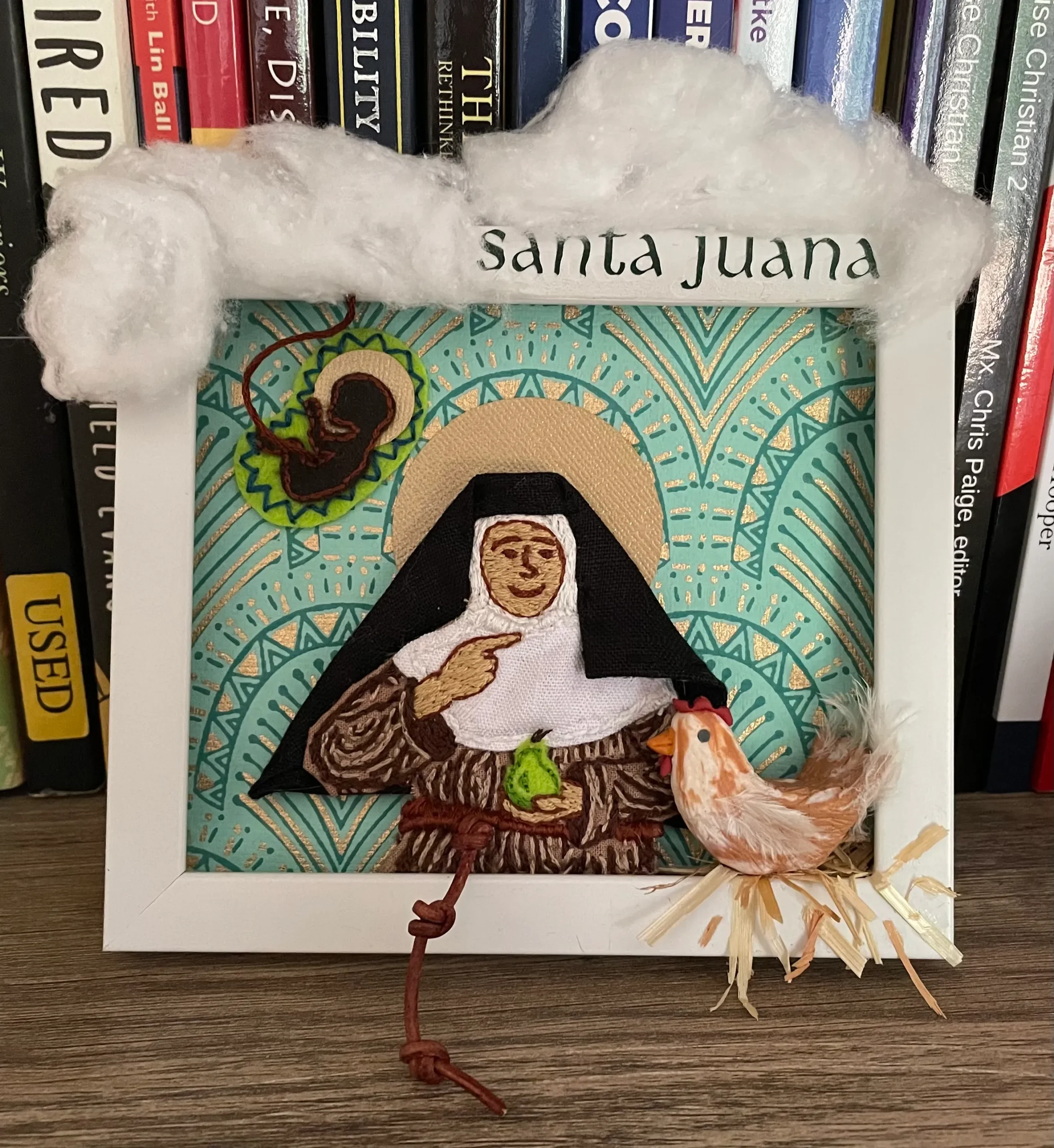
Crossing the sea from Ireland into the Iberian Peninsula, we find an abbess who went through a sex metamorphosis of her own: Madre Juana de la Cruz (1481-1534), who would often tell people that she had been conceived male but transformed by God in utero into a female. She would show off her prominent Adam’s apple as evidence; she was also capable of making her voice very deep.
At 15, Juana fled home when her parents tried to to marry her off, dressing as a man to avoid capture, and joined a Franciscan convent. Kevin Elphic (quoted in the QSpirit article where a longer description of Juana’s queering of gender can be found) writes:
“Each year pilgrims in Spain recreate the journey of young Juana leaving her family and traveling to the safety of the Franciscan convent. Every April, they contemplate a young girl dressed as a man, traveling to a refuge where she could remove those clothes and put on the clothing of yet another man, spending the rest of her life dressed in the habit of St. Francis.”
(Read More)
By 1509, she was elected abbess of the community, and as such found the freedom to write and preach that few women of her day had, even surviving the harsh scrutiny of the Inquisition.
If Madre Juana had lived today, would she (in which case, he) identify as a trans man? We cannot know, but it is clear that for Juana, gender was not rigidly binary; she believed that both masculinity and femininity resided in each person — including in Christ, as shown in a sermon in which Juana speaks as Jesus:
“‘And all those who seek in me a father, will find in me a father. And those who seek in me a mother, will find in me a mother. And those who seek in me a husband, will find in me a husband. And those who seek in me a bride, will find in me a bride. And those who seek in me a brother, or a friend, or a neighbor, or a companion, likewise will find in me everything they desire…’”
Christ’s gender shifts in response to relationship with others, just as Juana’s own did. Elphic sees in Juana’s writings and leadership a vital message for Christians today: “a vision of claiming whatever gender elements we experience as our own, and heroically integrating and accentuating them into our lives regardless of what critics say. …Juana’s own integration in her own person of male and female roles and attributes, models for us the challenge to achieve the same.”
For more on God’s gender as envisioned by Juana, visit my longer article here.
THE KING OF GENDERFLUIDITY

King Henri III of France (1551-1589) created a safe haven for gender variant persons in his court. He himself was known to wear makeup and “a mixture of men’s and women’s garments”; his court was full of individuals who shared his love for androgyny.2 His chief fool, for instance, was a person assigned female at birth named Mathurine, who had female lovers and wore a mixture of masculine and feminine clothing, so that she is often depicted “carrying a woman’s handkerchief in one hand and a sword in the other.3 Mathurine was beloved by Parisians; she frequently road a horse around Paris’ streets to respond to excited crowds’ questions “with a mixture of prophecy and gossip” — another example in history of cross-dressing or gender variance being associated with prophetic power.
(Read More)
Henri was as interested in spirituality as he was in androgynous dress and same-sex love. He often wore a fusion of feminine clothing and monastic attire, and founded the Order of the Holy Spirit, which included himself and his likewise gender-variant mignons among its members.4
But patriarchy had become too entrenched by Henri III’s time to allow his binary-threatening “effeminacy” to last forever. Eventually, Henri III’s religious and political enemies used his sexuality and gender presentation against him: “the portrait of a self-indulgent sodomite, incapable of fathering an heir to the throne, proved useful in efforts by the Catholic League to secure the succession for Cardinal Charles de Bourbon after 1585.” While Henri may have enjoyed pleasure, he was also an intelligent and conscientious ruler, who “spent long hours reading official reports and replying to them” and loved to discuss philosophy and astronomy. Like many gender variant persons throughout time, his reputation was marred by bigots who equated his gender expression with vice and used it to delegitimize his spirituality.
![a print of Joan of Arc by "Kit" that depicts Joan with short dark hair and face uplifted, eyes shut, holding a sword and surrounded by flames with text reading "I was born for this" above and "Do not be afraid" below.]](https://static.wixstatic.com/media/391b96_17ffc3df8401414c8d0874ef07905311~mv2.jpg/v1/crop/x_0,y_9,w_500,h_649/fill/w_600,h_770,al_c,lg_1,q_85,enc_avif,quality_auto/tumblr_omk1bzfIEA1rms5soo1_500.jpg)
CALLED TO “CROSS-DRESS”
Joan of Arc (1412-1431) is one of the dearest-held Saints of trans persons and others who cannot or will not conform to Western gender norms.
Self-identified as “La Pucelle d’Orléans” (“the Maid of Orleans”) but subjected to the slur hommasse (“man-woman”) by her enemies, St. Joan of Arc received a call from God at age 17 to put on men’s clothing and lead the French army to victory.
When interrogated later about her clothing choices, Joan declared she dressed and fought as a man on the authority of “God and his angels;” Mollenkott notes that Joan’s need to “cross-dress” is not so different from trans persons who transition “because of an inner urge that arises out of the depths of one’s own authenticity.”
Like Joan, many of us experience living openly as trans as an irresistible call from something deep inside and beyond ourselves. Intersex Christians may also find themselves in Joan’s story, as scholars like Patricia Nell Warren posit that she may have had complete androgen insensitivity syndrome (CAIS). For instance, Joan claimed not to menstruate.
(Read More)
Before her capture, Joan won the support of the French Prince Charles, who placed her at the head of an army of 10,000 peasants in 1429.5 With her hair “cropped short and round in the fashion of young men,” a suit of armor, and an ancient sword, Joan fit what Kittredge Cherry identifies as the medieval archetype of the “holy transvestite,” of which this site offers many examples on the 100-1399 page.
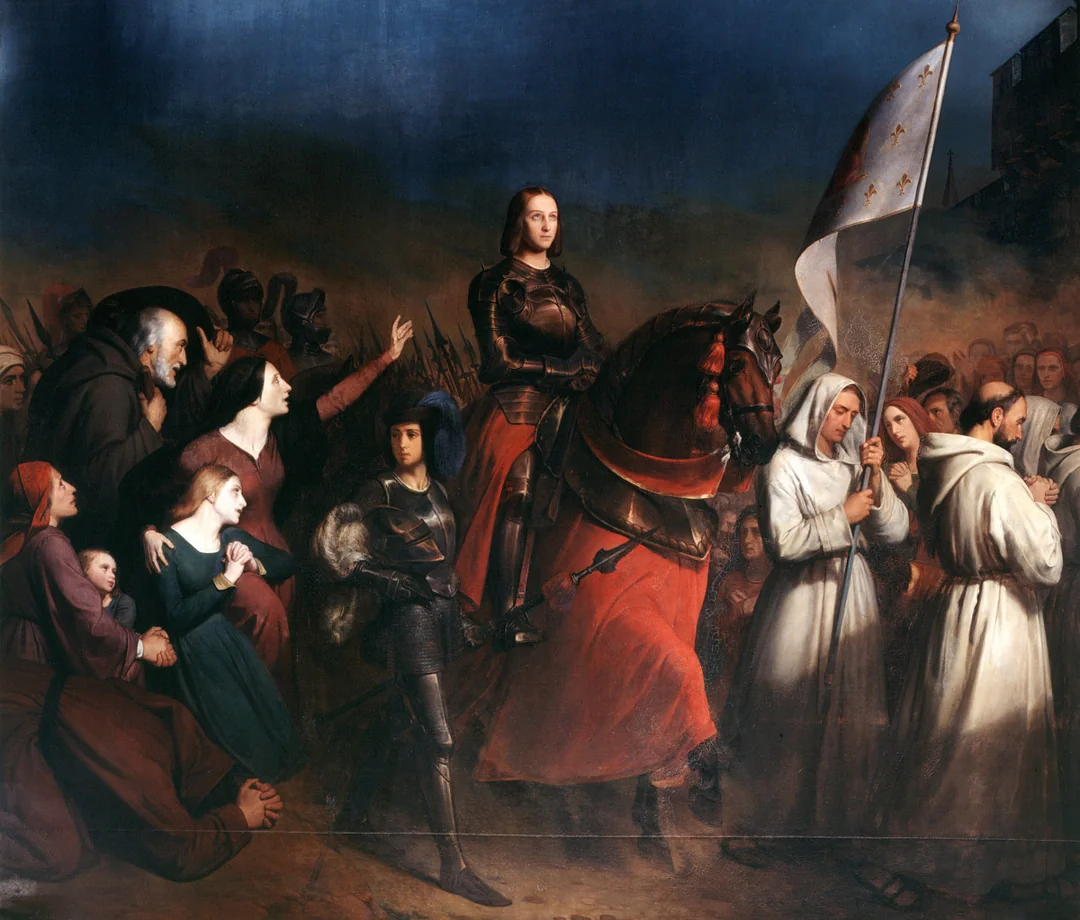
by Henry Scheffer
While the Church would soon burn her at the stake for her cross-dressing, the peasants adored Joan in her armor. As Cherry explains in her QSpirit article linked above, Joan’s “cross-dressing didn’t disturb them. In fact, they seemed to honor her for her transgender expression,” crowding round her to touch her and her armor, just as the woman of Mark 5:25-34 is desperate just to touch Jesus’ robe and be healed.
Leslie Feinberg argues that the peasants held Joan’s transgender presentation in highest reverence because it followed after what Joan’s judges called “the custom of the Gentiles and the Heathen,” wherein “gentile” referred to the “free farming communities still organized into gens, the family unit of cooperative matrilineal societies.”6 The peasants’ devotion to The Maid of Orleans is evidence that even as late as the fifteenth century, the ancient honoring of gender variant persons and cross-dressing priest(esse)s lingered in some pockets of European countryside. The ruling Christian class could not stomp it out, not utterly — though that would not stop them from trying.
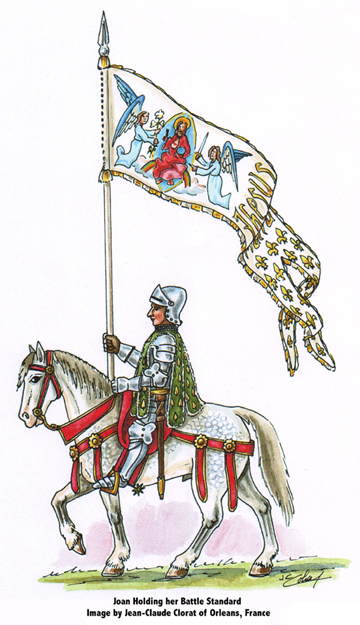
After Joan won him the French crown, Charles abandoned her to the Burgundians, who captured her on May 23, 1430, and sold her to England. From there the Inquisition tried and tortured her between January 9, 1431 up through her execution on May 30, 1431. They subjected this teenager to agony and utter humiliation for daring to claim divine authority regarding her gender variance. Even in death they would not leave her alone:
”The depth of her enemies’ hatred toward her transgender expression was demonstrated at her execution, when they extinguished the flames in order to prove she was a ‘real’ woman. After her clothing was burned away and Joan was presumed dead, one observer wrote, ‘Then the fire was raked back and her naked body shown to all the people and all the secrets that could or should belong to a woman, to take away any doubts from people’s minds.'”7
Fury and grief boil up in my stomach to think of what they subjected Joan and her body to, all too reminiscent of what so many trans persons and bodies are subjected to in our own time.
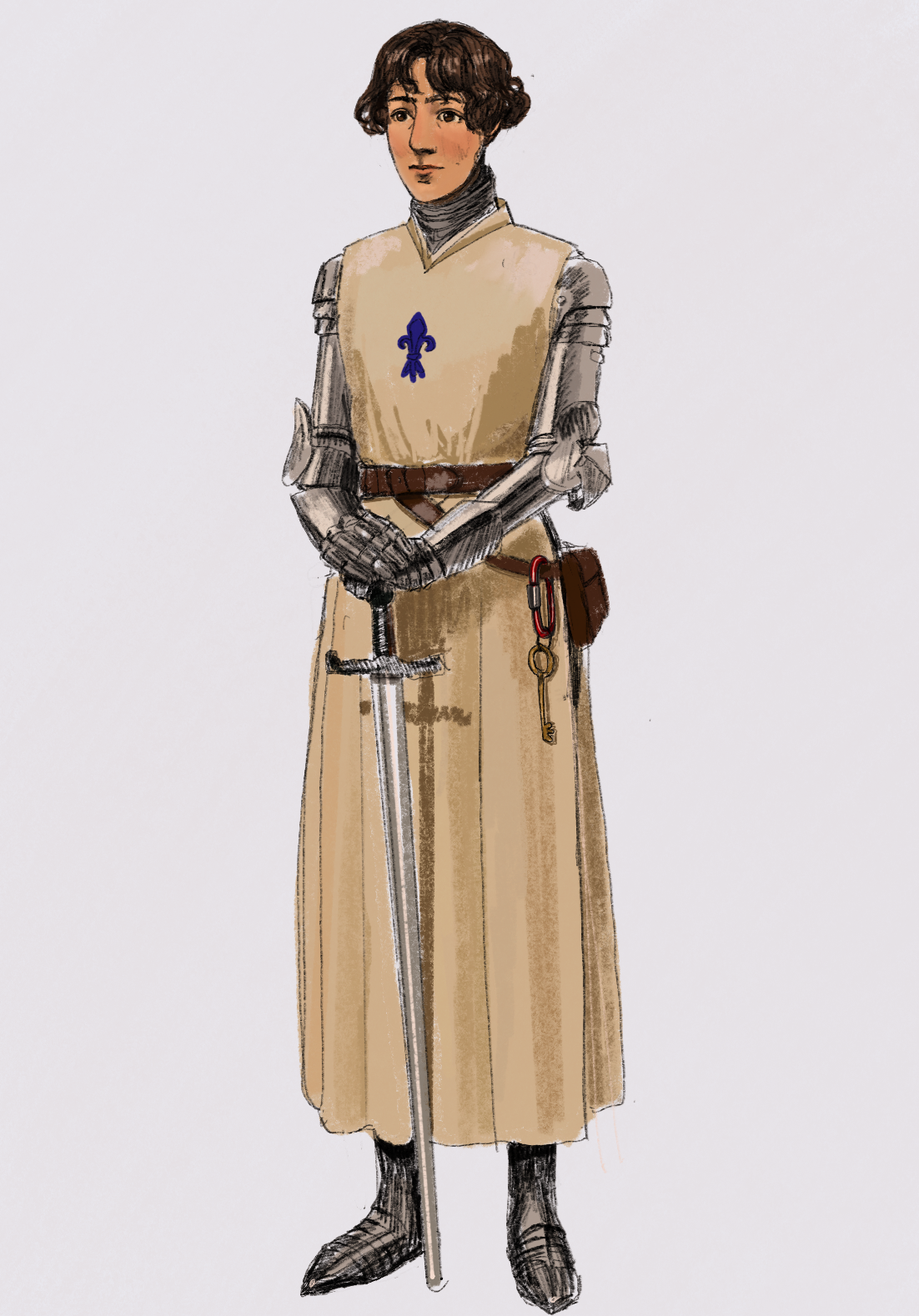
a butch-signifying carabiner
on which the key to heaven hangs
by franzias-cave on tumblr
Elements of classism and misogyny are at play in Joan’s execution, as is fear of witchcraft, but Cherry claims that the greatest affront to church authorities, “then as now, was the audacity of someone being both proudly queer AND devoutly Christian.” After all, one of the most heretical aspects of her cross-dressing to Joan’s Inquisitors was that not only did she wear men’s attire, but that she did so even when receiving Communion:
“On many occasions you received the Body of our Lord dressed in this fashion, although you have been frequently admonished to leave it off, which you have refused to do, saying that you would rather die than leave it off, save by God’s command.”
Just as transphobic Christians attack transgender persons today with Deuteronomy 22:5, Joan’s Inquisitors told her that her cross-dressing was heretical, “a thing contrary to divine law and abominable before God, and forbidden by all laws.”8 They were outraged that she would not stop showing up to court in “difformitate habitus” (“monstrous dress”). But Joan saw through their hatred and knew her apparel to be not monstrous but holy, declaring:
“For nothing in the world will I swear not to arm myself and put on a man’s dress; I must obey the orders of Our Lord.”
The courage with which Joan followed God’s calling is a beautiful gift for trans Christians today, and I pray that everyone who could be bolstered by her story finds it. As Leslie Feinberg writes,

by Katy Miles-Wallace
“I wish I’d been taught the truth about [Joan’s] life and her courage when I was a frightened, confused trans youth. What an inspirational role model — a brilliant transgender peasant teenager leading an army of laborers into battle.”9
The Catholic Church admitted their mistake 25 years after Joan’s violent execution, though it was not until 1920 that she was officially canonized. Perhaps their motives in overturning her conviction were less than pure — recognizing that her popularity among peasants could not be quenched, they co-opted it for their own — but the fact remains that the Church could not deny this youth’s holiness for long.
I pray that church authorities and communities everywhere will one day realize the incredible holiness that is a trans person embracing and living into who and what God has created them to be. Our very transness is a gift, one that has been rejected and reviled for far too long.
WHY THIS WAR AGAINST TRANS PEOPLE?

in nineteenth century Wales in the 1800s
What caused the Church to be so vehemently opposed to gender nonconformity, anyway? Why so much violence against people like Joan of Arc?
In Catholic Europe, cross-dressing was associated with the matrilineal, communal societies that existed throughout the world before the eventual rise in many regions of a class system: as soon as some members of any community begin to accumulate wealth and establish property laws, the class divisions that follow tend to be characterized by a shift into patriarchy.
(Read More)
Patriarchy requires a gender hierarchy, wherein those assigned male are placed above everyone else. Gender nonconformity threatens that hierarchy — if men behave “like women,” how can we place them above women?; if women behave “like men,” will they try to force their way into the dominant group?; if some people are too ambiguous to be categorized into either group, what does that say about our argument that this binary is the natural way of doing things or divinely ordained? Moreover, gender variance in the old matrilineal communities was associated with goddess worship, something else that needed to be stomped out to make way for the God that the patriarchs claimed was male and on their side.
And thus the Catholic Church, once it had allied itself with the ruling classes of Europe, joined the fight against gender diversity. An example of the various edicts put out by church authorities from the 500s onward comes from a canon of the Synod of Ver in the 800s that specifically targeted the kind of people assigned female at birth whom have been exploring, from the monk Marius to the soldier Joan of Arc:
“If women who choose chastity in the cause of religion either take on the clothes of a man or cut their hair, in order to appear false to others, we resolve that they should be admonished and criticized, because we consider that they err through a great ignorance rather than zeal.”
It seems that the Church did its best to prevent these transmasculine saints from arising before their cults could become too popular among the peasantry. Things only got worse as the centuries went on — twenty years after Joan of Arc was burned at the stake, the Inquisition was officially authorized “to battle witchcraft as a major crime,” with one of the accusations leveled against suspected witches being “the power to change sex.”10
Even under threat of death, resistance was not easy to quash:
“Throughout Europe in the later Middle Ages into the sixteenth century, masking and cross-dressing as another sex were still an integral part of urban carnivals with ancient roots. …In France and northern Italy, they [festival organizers] were called the Abbeys of Misrule; in England and Scotland, the Lords of Misrule and the Abbots of Unreason. …The Abbeys acted as courts, with mock jurisdiction over marriages. …Trans leaders were in the front ranks when the licensed days of festival ‘misrule’ exploded into real rebellion.”11
Indeed, Feinberg says, transphobia was harder for emerging upper classes to force on the lower classes than we might imagine:
“Buried in the history of the Middle Ages and right up to the dawn of the industrial revolution, the ancient respect for transgender had not been rooted out, even after centuries of illegality and violent punishment under slavery and feudalism.”12
Despite resistance both subtle and overt, rulers would continue to use every weapon in their arsenal — from armed soldiers to misused scripture — to eradicate gender diversity. In the next section, we will see how they expanded those efforts into the Americas.
COLONIZERS ATTEMPT GENDER GENOCIDE

Once Western Europe’s leaders found out about the existence of entire continents of people they labeled “heathens,” they were of course not content to keep their gender policing to themselves. As Leslie Feinberg states,
“I hold the powers that ruled [Western Europe] for centuries responsible for campaigns of hatred and bigotry that are today woven into the fabric of Western cultures and have been imposed upon colonized peoples all over the world.”13
European colonizers did their best (and continue to try) to wipe out the rich diversity of gender present in the Americas and other nations.
(Read More)
”Two-Spirit” is the umbrella term now used by many Native American / North American indigenous nations to describe Native persons whose genders lie outside a male/female binary, often involving a blending of masculinity and femininity within the individual. Such persons traditionally performed spiritual and/or medical roles, with specifics varying across nations; as such, they were highly regarded among their communities.14
Note that this term is not interchangeable with Western LGBTQIA+ identities, and should not be removed from its Indigenous context or used by non-Native persons. Feinberg emphasizes that distinction while describing how learning about Two-Spirit identities influenced zir:

“Discovering the Two-Spirit tradition had deep meaning for me. It wasn’t that I thought the range of human expression among Native nations was identical to trans identities today [in the 1990s]. I knew that a Crow badé, Cocopa warhameh, Chumash joya, and Maricopa kwiraxame’ would describe themselves in very different ways from an African-American drag queen fighting cops at Stonewall or a white female-to-male transsexual in the 1990s explaining his life to a college class on gender theory.
What stunned me was that such ancient and diverse cultures allowed people to choose more sex/gender paths, and this diversity of human expression was honored as sacred. I had to chart the complex geography of sex and gender with a compass needle that only pointed to north or south.”15
The violence with which European colonialists attempted to stomp out this diversity speaks to the threat of gender diversity to patriarchy and imperialism; countless Two-Spirit persons were murdered or incarcerated, while countless others were forced to dress and present according to European binary standards.
The role that Western Christianity played in this violence cannot be understated, as evinced in one Spanish official’s reaction to the violent murder of Two Spirit persons: “Balboa learnt that they were sodomites and threw the king and forty others to be eaten by his dogs, a fine action of an honorable and Catholic Spaniard.”16 Murdering human beings with dogs, a “Catholic” action! May God rain justice on their heads.
This violence was wrought because Western Europeans had learned to see any deviation from the rigid gender norms of their own societies as “a devilish thing” (in the words of 16th century Spanish colonialist Alvar Núñez Cabeza de Vaca): “sinful, heinous, perverted, nefarious, abominable, unnatural, disgusting, lewd…” This association of Two Spirit lives with ungodly perversion, i.e. something that God is against, was used to further justify genocide — the slaughter of countless Native lives, the theft of indigenous land and resources, and destruction of their cultures and religions.17
Thus violence and erasure — not only in the Americas but across the world — are part of Christian history that we must not deny or ignore. Sending missionaries to “third world” countries became more and more popular as the centuries went on from the 1500s into our own day, following on the heels of imperialism, and those missionaries brought the Western gender binary with them.
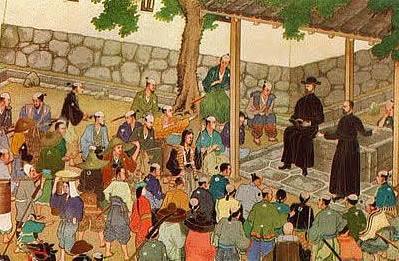
For instance, St. Francis Xavier missionized in China, India, and Japan; in the latter country, he was so repulsed by the widespread homoeroticism among Buddhist monks that he called it the ‘Japanese vice.'”18 Luckily, Xavier was not backed by military might as the missionaries of the Americas were, so that whenever he tried to preach on the “evils of sodomy” in Buddhist monasteries, he was simply laughed at or kicked out. The point remains that Christian missionaries have attempted to eradicate all behaviors that deviate from their gender norms, be that same-sex activity or non-binary identities, since the 1500s onward worldwide.
The authors of Queer Myth have this to say about gender diversity and European Christian colonialism:
”Those who prefer to avoid discussion of, or who might consciously attempt to suppress discussion of, what we might refer to as “Queer-Spiritual” knowledge, might consider the role that destruction of the symbol-making process has played in colonialism. Oppressors have long understood that cultural domination requires the dismantling of a people’s sacred narratives, the rites and symbols evoking those narratives, and the roles of persons whose responsibility it is to spiritually guide the people, whether by way of religion itself or by means of arts imbued with sacred impulse. In this way, the oppressor achieves his ultimate purpose – that of destroying the self-esteem, integrity, and independence of the individuals whose culture he wishes to dominate or decimate.”19
I hope that this website plays at least a small role in unburying “Queer-Spiritual knowledge” that has been suppressed for far too long.
While Europeans tried to eradicate Two Spirit expression from the Americas through the 1900s and even into the present day, they live on; see this website’s page on the 1800s to today for more on Two Spirit resistance and survival.
SURVIVING THROUGH SYNCRETISM

Christian missionaries in the Americas also waged a war against the traditional religions that abducted Africans brought with them. In order to keep their traditions alive, many Yoruba people enslaved in the Caribbean fused the Catholic Saints they were taught about with their own deities, creating the religion now known as Santería, also known as Lucumí (which has in turn influenced and been influenced by Vodou).
A large number of Orisha, or divine spirits, of the Yoruba religion exist beyond a gender binary; some of them have priests assigned male at birth who dress as women to perform their duties. That gender variance shines through in the Orisha of Santería, even after all the efforts white people have made to erase it from the enslaved Africans and their descendants.
(Read more)
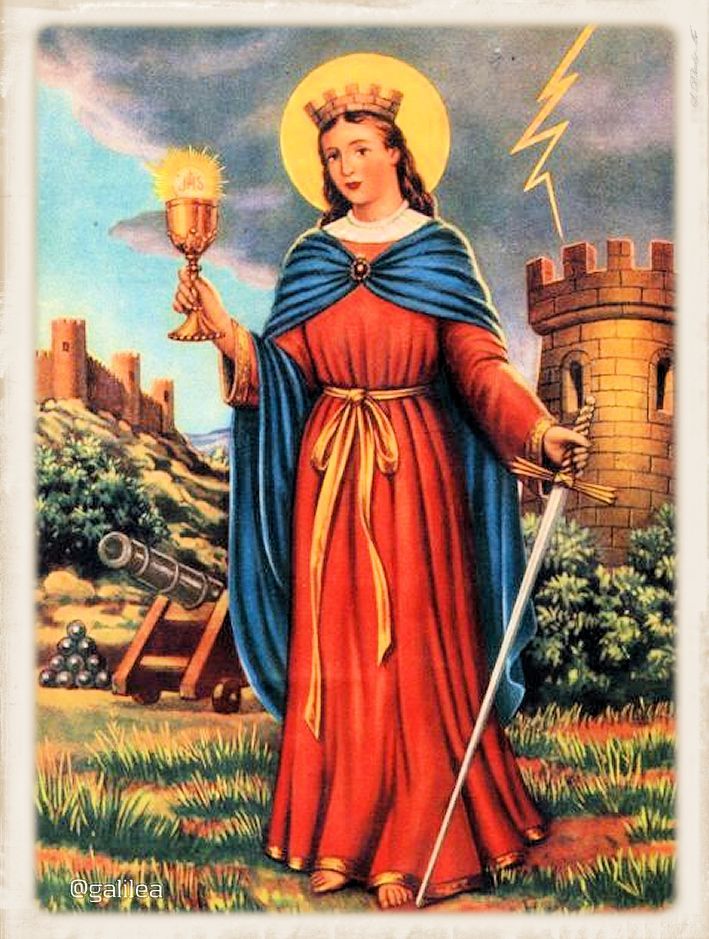
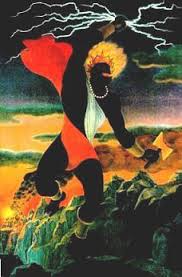
Chango (also spelled Shango), the orisha of fire and lightning, has been fused with a Saint we discussed on the previous webpage: Barbara. Because Catholicism traditionally depicts this virgin martyr in red, crowned, and holding the sword that beheaded her, with the lightningbolt that struck her father dead often in the background, she was identified with Chango, who likewise wears a crown, dresses in red, and carries a weapon.21 The weapon Chango most frequently carries, a two-headed axe, suits this being who blends masculinity and femininity. Represented primarily through statues, holy cards, and other images of Barbara, Chango enjoys “the freedom of both [sic] sexes.”
Another Yoruba-diasporic orisha is Babalú-Aye, who holds power over life-threatening illnesses, including HIV/AIDS. He is often identified with Lazarus, the man Jesus resurrects in John 11; and Saint Sebastian (renowned among queer Christians due to the prevalence of homoerotic art of him), whose relics were once used to defeat a plague.22

Erzulie Fréda, meanwhile, is the lwa (spirit) of love and sensuality in the Vodou pantheon. She can embody devotees of any gender, and enjoys flirting with and seducing persons of any gender; she also has three husbands. Erzulie Fréda is syncretized with Our Lady of the Sorrows and is considered a patron of “effeminate” and gay men.23
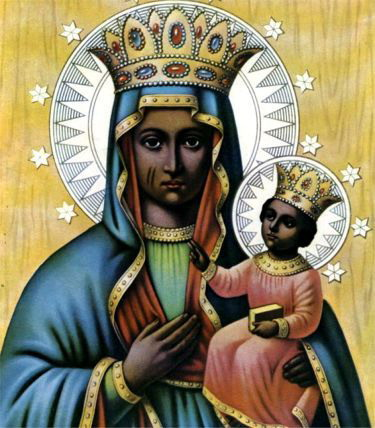
Erzulie Fréda’s sister, Erzulie Dantòr, is the “hot” to Fréda’s “cool” and is identified with the Black Madonna of Częstochowa. A fierce protector of women, children, and others neglected by society, Erzuli Dantor is considered a patron of lesbians.24
Inlé is another orisha, this one identified with the archangel Raphael, who sometimes merges with the female orisha Yemayá; their combined form is called Inlé Ayayá or Yemayá Mayéweló and is considered the patron of lesbians, “masculine” gay men, and trans persons.25
Santería is an invaluable gift to the whole community of faith, as it shows how Christianity can interact with other religions to produce new forms of spirituality rather than spiritual genocide.

MORE QUEER NUNS — NOW IN LATIN AMERICA
Two nuns from sixteenth-seventeenth century Latin American are commonly claimed by lesbian/sapphic Christians, and rightly so. However, each one’s story also involves elements that may resonate with trans Christians. Let’s look at Santa Rosa de Lima and Sor Juana De la Cruz.
(Read More)

of Lima ” by Aubrey Beardsley, 1896
St. Rosa de Lima (1586-1617) was so against the idea of marriage that she cropped her hair short and rubbed pepper in her face to make it blister, effectively scaring away the suiters who were enamored by her beauty. When she was finally able to join the Dominicans, it is said that the Virgin Mary loved Rose so much that she would reach out from her fresco on the wall of Saint Dominic’s church to embrace her.26
On the day she was to die, Rose dressed as a bride to greet Mary, who descended, kissed her forehead, and carried her up to Heaven. While Rose was more likely to be sapphic than trans, the way she altered her hair and face to scare off suitors was considered gender nonconforming in her day. Others perceive the Virgin Mary as genderfluid in this relationship, including Aubrey Beardsley in his drawing of an androgynous Mary embracing Rose.
Sor Juana Inés de la Cruz (1648-1695), was a Spanish Catholic nun in Mexico who wrote prolifically and was well educated, which was much out of the norm for women of her day. She was also “deeply concerned with improving the lives of women, indigenous Americans” and enslaved Africans, which is reflected in her writings.27 Her text on women’s rights, “La Respuesta,” earned her the scrutiny of the Inquisition, who prevented her from writing for the last three years of her life.

by Miguel Cabrera, 1695
Juana used her nun’s quarters as a salon, interestingly enough, where Mexico City’s intellectual elite would visit to share her thoughts. One visitor was Countess Maria Luisa de Paredes, to whom Juana wrote love poetry, such as the following passage:
That you’re a woman far away
is no hindrance to my love:
for the soul, as you well know,
distance and sex don’t count.
The idea that sex “doesn’t count” for the spirit may resonate with those trans persons who feel that their spirit is not gendered. Trans people might also connect to Juana’s statement that
“I am not a woman…/ I know only that my body / Is neither one gender nor the other.”
I as a nonbinary person certainly relate to that sense of not fitting into either binary gender category, yet lacking the language to describe just what I am. Meanwhile, intersex persons might resonate with the experience of a body that does not fit into binary constructions. I wonder how Sor Juana would identify if she lived today — would she be excited to learn of terms like “nonbinary” or “genderqueer”? There is no way of knowing, but I am thankful that language has (re)emerged for people like Sor Juana who know that they are “neither one gender nor the other.”
CITATIONS
- Queer Myth, p. 40 ↩︎
- ibid., pp. 174-175 ↩︎
- ibid., p. 228 ↩︎
- ibid., pp. 174-175 ↩︎
- Transgender Warriors by Leslie Feinberg, p. 32 ↩︎
- ibid., pp. 37, 39 ↩︎
- ibid., p. 36 ↩︎
- ibid., p. 34 ↩︎
- ibid., p. 36 ↩︎
- ibid., p. 71 ↩︎
- ibid., pp. 76-77 ↩︎
- ibid., pp. 79-80 ↩︎
- ibid., p. xii ↩︎
- https://boardingschoolhealing.org/healing-with-two-spirit-and-native-lgbtq-relatives/#:~:text=Prior%20to%20forced%20conversion%20to,their%20proper%20place%20of%20honor. ↩︎
- ibid., p. 23 ↩︎
- ibid., p. 23 ↩︎
- ibid., p. 22 ↩︎
- Mollenkott, pp. 143-144 ↩︎
- Queer Myth, p. x ↩︎
- ibid., p. 252 ↩︎
- ↩︎
- ibid.; https://outreach.faith/2023/01/how-saint-sebastian-became-a-queer-icon/ ↩︎
- Queer Myth, p. 135 ↩︎
- ibid. ↩︎
- ibid., p. 184-185 ↩︎
- ibid., p. 287 ↩︎
- ibid., p. 194 ↩︎